This article was featured in One Great Story, New York’s reading recommendation newsletter. Sign up here to get it nightly.
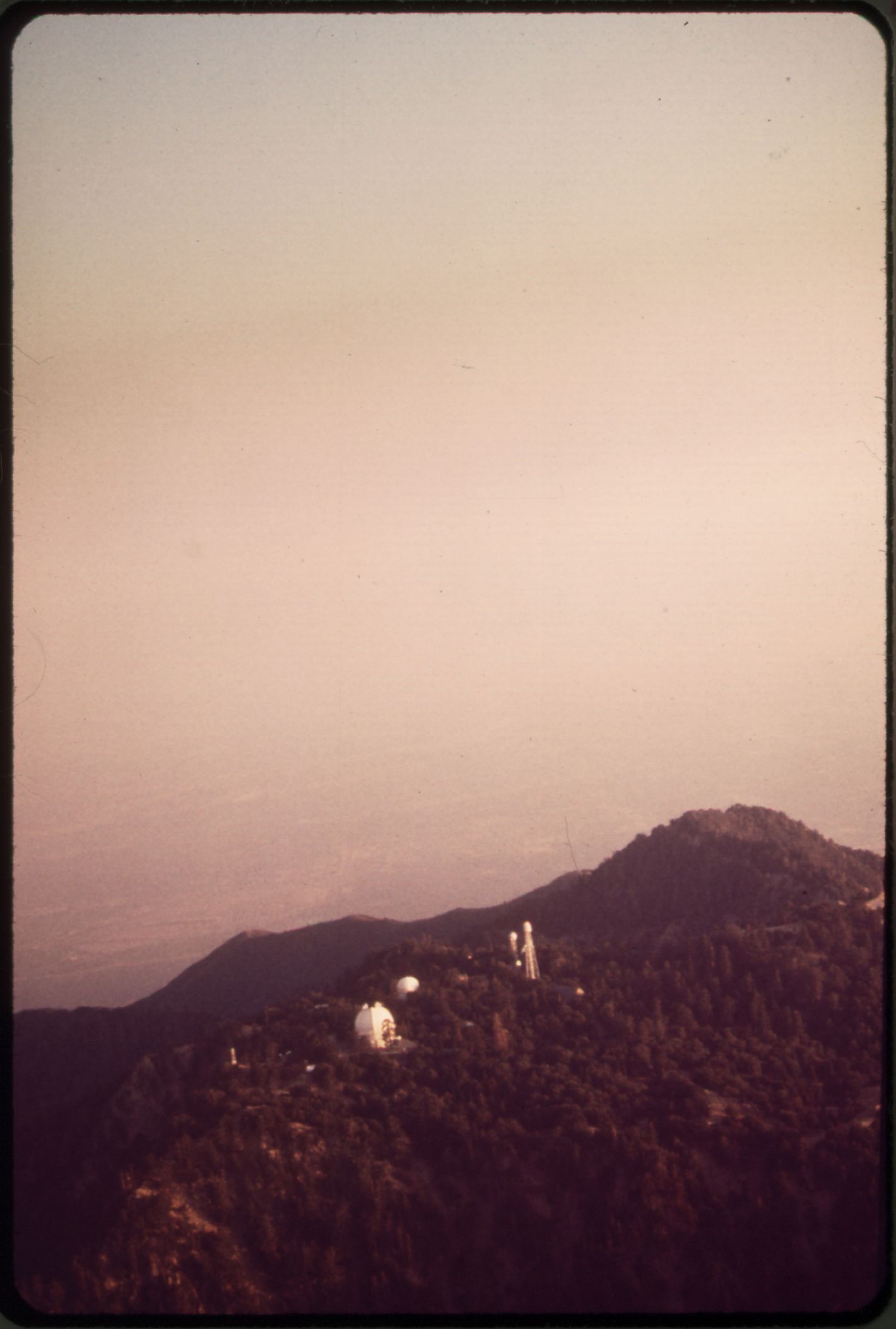
The Eaton Fire started at the location of my first kiss. We used to park on the shaded lane across from the mountains and sneak past a cliffside house, through a fence, and between some brush to perch on a concrete slab that overlooked the canyon. There, above the narrow watershed, we drank peach schnapps, listening to the Cure, or Prince, or Erik B. & Rakim, and fooled around. Beneath our feet was some unidentified infrastructure, but “the lookout,” as we called it (obvious, I know), offered a glorious view. Beyond the mouth of the canyon, sharp ridges followed the tight turns of Eaton wash. Somewhere back there were waterfalls. If the moon was out, the river rocks glowed. Along the highest peak were the lights of Mt. Wilson, 4,000 feet overhead, where one of the world’s great observatories sits. When the 100-inch telescope was built in 1917, the nearly five-ton lens cast from French bottle glass was carted up a dirt road. If you followed our line of sight, past Mt. Wilson to the northeast, there was the Mojave Desert, and then Death Valley, 250 miles away.
That’s where we found teenage refuge, trying not to wince while shooting capfuls from sticky bottles of dated booze, pilfered from our parents’ liquor cabinets. I must admit we probably left a few bottles behind. We were horny children. For romantic effect, the lights of the observatory blinked in slow rhythm above. It was up on that ridge, as I’d learned in AP Physics, that Edwin Hubble had discovered the universe was expanding, using some glass plates and emulsion. This was not top of mind. Far more important was making out with Elizabeth Dolinski. Down below, the trail crossed a bridge, ascended the opposite side of the canyon, and led into the wilderness. That’s where, in the dark, you could just barely see a series of delicate silhouettes — the steel latticework of some very high-voltage power lines strung aloft.
We’ve all seen the video of those power lines on the evening of January 7: a transmission tower, surrounded by fire at the base, flames swirling in a windstorm. Minutes later, the fire is raging. Twenty minutes later, the sky over Altadena is orange. Twenty-four hours later, much of my hometown would be gone.
When I drove into Altadena the next day to check on my family’s house and others, the fires were still burning. Strangely, I noticed how the citrus trees had survived. Between all the blackened chimneys stood oranges, lemon, limes. Winter is fruiting season, and the ash in every direction was punctuated by clusters of bright yellow and orange polka dots. At one point, I happened upon the house on the canyon, the one we used to sneak by to get to the lookout, cradling cans of Long Island Iced Tea with amorous intent. All that remained was the foundation. It was surely one of the first to go.
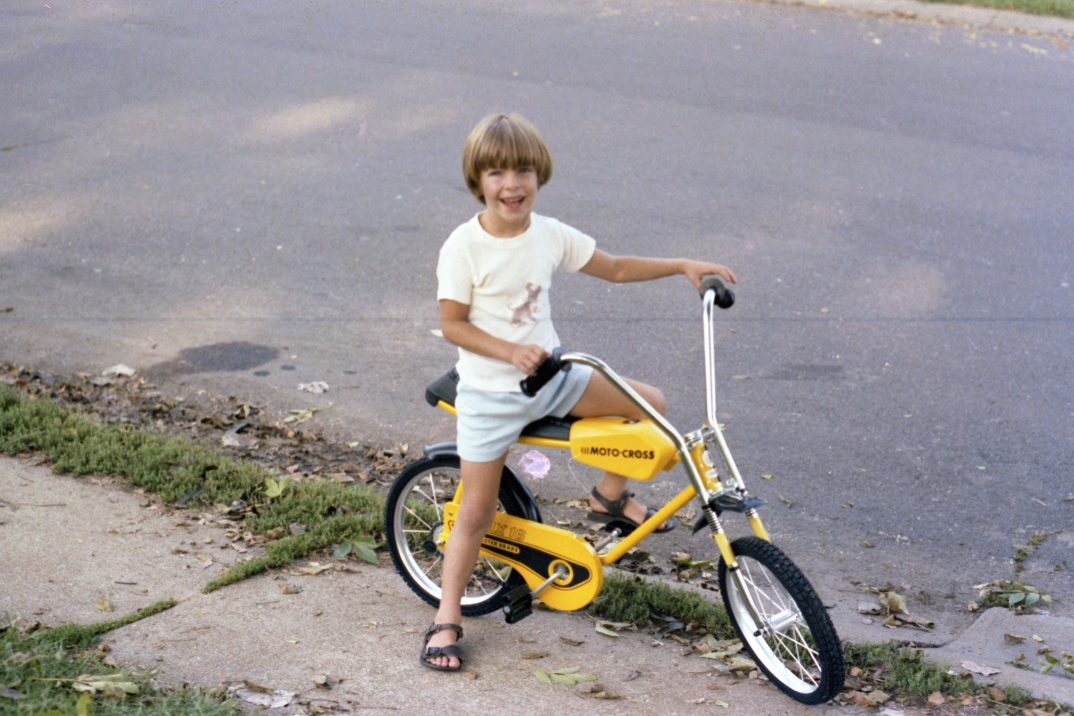
There are places and then there are the places you grew up. I moved to Altadena in the ’80s as a child. My brother and I landed there with my father, after my parents went through a protracted, acrimonious divorce. (Courtroom. Murder. Very complicated.) In Altadena, my father raised me and my brother by himself. He was a newly hired physicist at the Jet Propulsion Lab, a massive NASA facility in the Arroyo Seco on the edge of town. I remember licking the honeysuckle from our landlord’s backyard vines and complaining that I missed the snowball fights back home in Minnesota. Soon, I couldn’t recall which street we’d lived on in Minneapolis. I guess we were like many millions before us, coming to California to start over. Altadena was a particular kind of refuge. Everyone’s place of origin is special to them, but let me try to explain why Altadena was more than that.
Turn back the clock 160 years to when the town originated as a place that attracted freethinkers and dreamers and eccentrics. It was mostly a giant poppy field, part of a Mexican land grant carved out of formerly Tongva land, when Benjamin S. Eaton, a Harvard lawyer and the district attorney for the fledging pueblo of Los Angeles, came up to the foothills and first diverted some water to grow grapes. Others followed, getting their homburgs dusty and sweating through their wool three-piece suits while irrigating farmland and building the occasional prairie mansion. Around the same time, Thaddeus Lowe, a largely self-taught scientist who pioneered aerial reconnaissance with balloons in the Civil War, showed up in Altadena and decided to build a funicular railway that ran straight up the mountain to a Victorian hotel he erected on a peak named in his honor. Andrew McNally, of Atlas note, built a 7,000-square-foot manse on Mariposa and ratified Mt. Lowe by putting it on his oversize maps. Downslope, neighboring Pasadena was founded as a Republican town, and the entire area became a destination for Black migration from the South. Owen Brown, the son of abolitionist John Brown, who’d participated in the raid on Harper’s Ferry but eluded capture, arrived with some fanfare in Altadena and built a log cabin in the woods, where he received progressive pilgrims. When the legendary anti-slavery crusader died in 1889, several thousand mourners, Black and white, marched together and sang “John Brown’s Body.”
By the early 20th century, Altadena attracted an eclectic range of newcomers, including artists and musicians, bohemian socialites and utopian romantics. People with Thoreauvian ideals came looking for space to express spiritualism through craft. A new intentional architecture was born in the form of the Craftsman bungalow. There were mystics and scientists and mystical scientists, such as the rocketeer and dedicated occultist Jack Parsons, who conducted the world’s first successful rocketry experiments in the woods — when he wasn’t performing sex magic rituals with L. Ron Hubbard. Parsons pioneered the rockets that built the modern world. Then his house exploded — maybe accidentally, maybe not — and Parsons was killed, but not before he’d co-founded JPL, where my father got the job that brought us to this place.
By the time we arrived, there was some money around, but mostly the town was prewar bungalows and postwar ranch houses. The scattered commercial areas were populated by humble storefronts: Steve’s Pets (don’t touch the parrot; that beak could break a broom handle); Webster’s Fine Stationers (excellent Trapper Keeper selection); Fox’s Restaurant (closed daily at 2 p.m.). The family-owned hardware store had been there for 80 years.
It was a place where people came to stay. They arrived, bought houses, raised children, then those children bought houses and did the same. Altadena was unusually diverse, an anomaly in an otherwise socioeconomically divided Los Angeles. In the 1980s, the town was about 40 percent Black, owing to the fact that some neighborhoods — like the Meadows, way up in the mountains — were never redlined. And when redlining was outlawed everywhere else, stretches of Altadena were bought by middle-class Black families. There was a large Latino population, of course. There were Vietnamese families. Armenians who had fled the civil war in Lebanon. There were Nisei and Sansei, second- and third-generation Japanese immigrants whose families had come to the U.S. in the early 20th century. There was a large enough Jewish population between Altadena and Pasadena for a synagogue. Many of the neighborhoods were racially mixed. There were several private schools in town, but we couldn’t afford it, so I went to public school through senior year. In retrospect, it was a great privilege to learn how to be oneself among all kinds of people.
In places, Altadena was thoroughly pastoral: The zoning allowed for farm animals, and people had roosters and goats and were known to ride horses to the Rancho, a favorite local watering hole for happy-hour suds. The Rancho sat way up Lake Avenue, where we were usually above the inversion layer and therefore the smog. We’d gaze down the hill toward the smudged skyline of the vast city we never went to. The iconic neighborhoods and culture of L.A. were a distant notion. We were miles from the beach. Beverly Hills was God knows where. I had never heard of Century City. Our parents were modest professionals, educators, nurses, car salesmen. Hollywood was something we saw on TV or at one of Mann’s Theatres in Hastings Ranch. We rode bicycles with banana seats and put cards in the spokes. I didn’t realize it then, but Altadena was a haven where my younger brother and I could shake off the ordeals behind us. There’s no complete escape from anything, of course, but our soft entry into Altadena’s easygoing village life made an abnormal childhood as normal as it could be.
My last school had been a Modern Orthodox yeshiva in St. Louis Park, where the Coen brothers grew up. On the first day at my new school, I was walked into homeroom in the middle of class. You know the scene, and the social terror, of Mr. Wagner introducing the new kid: “Everyone, please welcome Joshuah Berryman …” Before I sat down, a guy named Clifford yelled out: “Oh damn, Josh got Toughskins on.” The class rolled. Toughskins, a house label of Sears, was apparently not in mode here in California. I never wore Toughskins again, although I did make friends with Clifford. He was enormous, and people called him (inevitably) “the Big Red Dog.” He had deadly aim with the carob pods that littered the school playground.
Soon, I made other friends. Deepak across the street. Hiro, a precocious skater down the block. Eddie, a computer enthusiast who went to Catholic school and lived near the golf course. The Moore brothers, who sang in harmony. John Yousoufian liked to build homemade crossbows from sprinkler parts and go to the Ren Faire, where he wandered around speaking an Elizabethan pidgin of his own making. Mark Adams, who would become my closest friend through high school, had an Apple II Plus, the first computer any of us got our hands on, and we would program and play games late into the night on sleepovers. Mark also had a pool, an incredible luxury. His neighbors, Rick and George, were a gay couple who reminded me of Statler and Waldorf from The Muppet Show, even though they were, at the time, maybe 40 years old. Once I saw Rick, who I now realize looked like a young Dick Cavett, standing in front of his house with a BB gun, shooting the pigeons that would always shit on his patio. When he saw me, he smiled and said, “Enjoy the carnage.”
We were feral children. Our parents often had no idea where we were. The relative safety of Altadena allowed for that. We spent afternoons and weekends amateur bushwhacking or marauding in packs on our bikes. We caught tadpoles in Eaton Canyon. We explored the water-management tunnels, which may have also been sewers. We hoarded quarters for marathon bouts of Donkey Kong Jr. at various liquor stores, like Alan’s Market, the later source of illicit spirits for adolescent rendezvous. Recently, I drove past what used to be Alan’s and recalled how when we were kids there was an unofficial beach ride “service” where a guy would stop in his van across the street from Alan’s and take you to Venice for 50 cents. This was an improvised, freelance operation. The guy just showed up one day and spread the word. I can’t remember his name. I’m not sure I ever knew it. But we used to get in this dude’s van, beach towels and trunks in hand. We were maybe 12. As far as I know, our parents were unaware.
My father would have never driven me to the beach. He was not the beach type. I’m not sure his car would have made it, anyhow. He drove a yellow Datsun that had rusted through at the foot wells. The ignition’s key assembly had stopped working, so he’d rewired a light switch from an electronic-surplus store into the dashboard. The car turned on by flipping the toggle. He also built our stereo from a kit he ordered from the back of Popular Mechanics. I used to love going to his lab at JPL, where there were lasers and liquid-nitrogen containers and machines with lights and steam.
In fourth grade, my father sent me to an experimental school, all the way up on Loma Alta, where the class spent the year in one big free-form learning session, assembling geodesic domes and using hydrogen canisters to build tiny replicas of the Hindenburg and set them ablaze. On the other side of the fence was the Angeles National Forest. One day, during our endless recess, we looked up and saw a line of fire that looked like yellow tinsel draped along the top of the ridge. Huh. We went back to playing. It was not a Santa Ana condition, apparently, and the fire never came down the slope. It left a black mark up Brown Mountain, the peak named for Owen. His cabin had long since burned down. The school’s unruly pedagogy was later rejected by parents, I heard, and the name was changed. That school survived the Kinneloa Fire in 1993 and the Station Fire in 2009. On January 8 of this year, it burned to the ground.
The first time we saw David Lee Roth at my synagogue, a murmur raced through the congregants. We had heard he would show up for the High Holidays. And sure enough, he appeared, picking a kippah out of the basket at the entrance. Among the Hebrew-school crowd, this was cause for celebration. Here we were, beating our chests and naming our sins, and there was David Lee Roth, trying to keep the kippah on his leonine rocker’s mane without a hairpin. “Thank you, Hashem,” said David Kopp.
We all knew the lore about how Roth had gone to John Muir High School, one of two main high schools for Altadena. The Van Halen brothers went to Pasadena High School, across town, not far from where Eaton Canyon ends in a reservoir. They were half-Dutch and half-Indonesian, and their father, a jazz musician, had brought his family to the U.S. by transatlantic liner in the early 1960s to escape the racism they experienced in postcolonial Netherlands. At some point, Eddie Van Halen met Roth and formed what must have been the tightest cover band in history; it was called Mammoth. They played backyard parties and local clubs. The posters for Mammoth parties were still on the back wall at Poo Bah Records, above the imports.
When I eventually arrived at Muir, we were tickled at the school’s various notable alumni, like Jackie Robinson and Octavia Butler, who used to walk the same path every day, a circuit that crossed Lake Avenue a few blocks north of my dad and stepmother’s house. Rodney King graduated years before us but had dated a friend of mine, so we would see him around. Years earlier, there was Sirhan Sirhan, who in 1968 assassinated Bobby Kennedy, but we didn’t talk about him.
Muir was a massive school, an Art Deco educational citadel built in 1926. When I was there, it could be a gritty place, but it had a long-standing roster of beloved teachers and, if you wanted, you could get yourself pretty well educated. Bandannas were forbidden, because of gangs, but you could take Latin with Mr. Creeth, who would sit at the front of the classroom with a shortwave radio, tuning in to international cricket matches, and try to explain the rivalry of Pakistan and India, all in the Roman tongue. Mr. Moore made us recite Canterbury Tales in Middle English. Mrs. Brown, the social-sciences teacher, had us read Miracle at Philadelphia and Howard Zinn hand in hand. “The only way to read either,” she said.
AP American History was taught by Mr. Zweers, a sepulchral former vaudevillian and magician, who had built an entire theater in a warren of rooms behind his classroom. We used the flats, props, and costumes he had been assembling for decades to put on monthly plays with race-agnostic casting, like a Little Rascals theater company, for visiting third-graders from local elementary schools where many of us had gone and had been ourselves ferried by yellow school buses to witness these very same plays.
It goes without saying that Muir had a legendary football team. Go Mustangs! The players were fearsome figures who walked around in their pads on game day. Our great rivalry was with Pasadena High School, across town, not far from the reservoir at the end of Eaton Canyon. In my day, we always won. Go Mustangs! There were so many different cheer squads that on fall Fridays, the quad was full of girls in goldenrod pleated skirts and blue sweaters bearing a massive M.
My friend Alison was in short flags. She was half-Japanese, and her father was born in the U.S. but had been interned at Manzanar. She and her friends loved the movie The Witches of Eastwick. They were drawn in, not by the supernaturally empowered widows and divorcées but by Jack Nicholson, the witches’ nemesis, who was also the Devil. When I asked why, she explained: “Dummy, girls like bad boys.” I didn’t understand what she meant. One of her close friends and fellow Nicholson enthusiasts was Elizabeth Dolinski, she of the trysts in the woods of Eaton Canyon. I didn’t think I was a bad boy, but there we were, fooling around beneath the power lines.
Our homecoming game against PHS — the Turkey Tussle — was played in the Rose Bowl. Whoever won took home a bell and kept it until the next year. We had that bell all of my four years at Muir; it would get paraded through the school the day of the Tussle, heading a long column of our vast drum corps. The corps would rock the halls, leading the students like the Pied Piper out to the quad where they gathered up and pounded out a prolonged march so loud you could hear it a mile away. When I see a drum line today, I still get shivers, stirred by the recollection of being in near-mystical thrall of John Muir’s endless, magnificent drum line. Go Mustangs.
There was a kid named Jason Stoner in the drum corps, and when he wasn’t hammering his marching snare, he lived up to his name by blazing weed in the handball courts with the other stoners. Different handball courts hosted different cultural cliques. Next to the stoners were skaters, cholos, aspiring Crips, and scattered metalheads, and spread around campus were other niche contingents, like Morrissey diehards, classic punks, and a few mods even in secondhand bomber jackets and thick-soled creepers. Out on the quad were preppies in polos and college sweatshirts, band nerds, and soccer players in varsity jackets.
This was all on the fringe of the dominant culture, which was rap and R&B. In seventh grade, at Eliot Junior High, there had been a near riot when a rumor spread that Run-DMC was playing a surprise show at lunchtime. (They weren’t.) In ninth grade, the homecoming theme was “Push It.” By high school, Public Enemy dominated the boom boxes that were technically contraband on campus but were nevertheless omnipresent. When N.W.A’s first album started circulating on the quad, we traded those tapes like samizdat — N.W.A couldn’t be played on most radio stations except for a little bit on KDAY — until the magnetized silver wore out.
Why am I telling you all this? Partly, I want you to know what it was like to grow up in Altadena. But also I want to remind myself. In the wake of the fire, it feels important to grab hold of these fragile things. They come in flashes, like taking mnemonic dictation: Here I am, sneaking out of Eddie’s window to meet Ari Goodknight, whom we both had crushes on; or wandering through the kind of ratty Altadena Golf Course, convinced that the caretaker would soon be upon us with his rock-salt gun; or smoking cloves on Halloween in the rain with Katie Moore, dressed like a pack of Marlboros. I am thinking about how I’d climb into the trees at school, out by the Circle Drive, with various small-time troublemakers and smoke weed from hollowed-out apples. And how, one day in 11th grade, I was sitting up there when Heather, the tall, refined redheaded senior I admired in calculus class, came and found me in those trees, motioned for me to come down, and asked me to prom. She drove us to the big night in her bright-orange BMW 2002. The boutonniere and corsage roughly matched the dress and coordinated cummerbund: mint green. Even though we were just wandering into our regular old high-school gym in rented polyester formalwear, it felt like we were joining Wellington at the Duchess of Richmond’s ball.
It wasn’t all rosy. I should say that. We were teenagers, for starters, full of drama, agony, anxiety. Today, my father likes to tell everyone what a terrible adolescent I was. He thinks he’s being funny. But I know he’s also not joking. We were at odds. He was a difficult father, and I was a difficult son. By high school, I had become particularly moody. My mother had long since disappeared. Much later, I realized these two things just might have been related.
Back in Minneapolis, my mother was an educator, my father doing his postdoc at the University of Minnesota. But my parents had married young, maybe too young, and perhaps were not quite suited to each other in the first place. They were surely no longer a happy couple when my father got his job at JPL. He first went ahead to California without us. My mother was meant to take us soon. She never did. Instead, she had an affair with a man named Sonny. He was a fun guy, an aspiring folk singer. He was also a drug dealer. For reasons that have still never been explained, Sonny was murdered in our house, the night before my 9th birthday.
I had answered the door and let the killers in. In the aftermath, my father got full custody of me and my brother, an extreme rarity at the time. Over the next few years, my mother descended into alcoholism, lost a series of jobs, became homeless at times. In the throes of the divorce, my brother and I often became the terrain for a proxy war, a psyops campaign that my mother won. And it meant that I blamed my father for the divorce and, by extension, my mother’s fate. It was unfair. I had no idea what it meant to raise two boys, alone, starting at 34 years old, on a government salary. I took out my anger on my father, and eventually he kicked me out of the house. I was 16.
I moved into a friend’s house. I’ll call him Owen. Both of Owen’s parents were psychologists, and the frequent (predictable) joke was that their kids were the most fucked-up of anyone. Particularly Owen’s older brother, who wore all black and had waist-length hair tucked into a black turban and played in a post-punk industrial band where they’d bang scrap metal together, then spent the rest of his time at Kinko’s, assembling zines by hand with clip art to promulgate his homespun religion, called “Cowan.” His brother wore a shirt that read “We Are All Prostitutes.” He fulminated about how skate culture was false rebellion and Owen’s friends had no politics.
On that score, he was basically right. The gang that would descend on Owen’s after school was just a pulse of pure adolescent energy. They swarmed the house, tearing through the pantry like locusts, devouring whatever Pepperidge Farm Goldfish could be found, playing video games, watching MTV, and jumping off the roof onto the family trampoline, then into the pool. His parents allowed all this because they were the “cool parents,” which is how I wound up living with them. I slept in Owen’s room using a six-foot-tall stuffed dog as a makeshift bed. I thought I had it made.
With adolescence started to come some of life’s more serious problems. Drugs, sick parents, emotional instability. People started to make irreversible choices. Then there was the news. Out in the real world, the Cold War still loomed. It’s hard now to remember how everything was overshadowed by a constant, pervasive fear we’d be vaporized any second. In junior high, we had all watched The Day After along with the rest of the country and then were asked to discuss it while filling out nuclear-anxiety workbooks. In my freshman year, we were sitting in class writing essays about Christa McAuliffe and the glories of space discovery as we watched in real time the Challenger leave the launchpad, foam up against the blue sky, and explode.
There was occasional violence; kids got jumped, or mugged, like I did a couple times. Once there was a shocking killing: a student and teacher murdered together, in what people called (not quite accurately, it turned out) a “bizarre love triangle,” like the New Order song. I had spent the morning trying to decide if I would be ridiculed for wearing a faux-Izod shirt, which I’d bought (and immediately regretted) because I couldn’t afford a real Izod, but when I was dropped off at the circle drive, everyone was crying, including the football players, and I knew something was wrong. No one noticed my sartorial misdeed.
Some kids required serious clinical interventions, including Owen, who by senior year was in the process of developing schizophrenia. We didn’t know it then. All we knew was that he started presenting as Jesus. He chanted, walked around Eaton Canyon in a caftan with no shoes. He said he smoked a coyote turd and saw the Holy Father.
Truth is: I barely noticed. The buoyancy of youth is powerful. It pushes the bow through the waves. Every so often my mother would call in the middle of the night, drunk. I am not sure how she got Owen’s room’s phone number. I had not seen her in six years by this point. I thought this was normal. Or rather it didn’t occur to me that it was not normal.
When I talked about Minneapolis to my friends in Altadena, I never mentioned what had happened there. I’d describe the woods, the lakes, how we jumped into open boxcars and jumped off the train from the trestle bridge over Minnehaha Creek, where we would swim to the rope swing and then pull leeches off each other before going home. “Sounds like Stand by Me,” Owen said in a moment of clarity. Which it did. It’s also what happened. Partly.
Nostalgia can be a seductive narrator. It can rearrange history into endless blue-sky days. Now, in my recollections of Altadena, it appears as the setting for a childhood that was only bright and happy. There is a yearning thumb on the scales. In my desire to conjure a lost place, I am certain I am simplifying. And for now, I’ll take it: The sun was shining; we were kids with no expectations — energetic, searching. Ours was a picaresque tale of wondrous youth. What suffering there was could be overlooked, stored away for adult reckoning. I forgot all about my mother. I did not feel weighed down. On the contrary, I felt free. No one knew what was coming.
Among the glories of growing up in Altadena was our proximity to KROQ, a nationwide cultural beacon that was also a local station. KROQ had introduced punk and New Wave to America and defined the music of that era. The host of “Rodney on the ROQ” and other DJs had put the Ramones and the Clash and Talking Heads on the air early. And it was down the hill in Pasadena, which made it feel like it was ours.
My friend Jun Ohnuki’s older brother worked at KROQ. As did Mark’s older brother’s girlfriend. They got us tickets to all-ages shows, which is how we might wind up seeing Black Flag at 13 years old at Perkins Palace, a run-down theater in Pasadena. Nearby was the Espresso Bar, a beatnik-era relic of a time before Starbucks, when coffeehouses were secret redoubts of the avant-garde, and that was where those inclined toward cultural rebellion gathered and pontificated and posed with lit Gauloises over purposely obscure volumes of Céline or played ironically melodic Sonic Youth covers from the tiny stage on open-mic night.
Sometimes, we snuck into the Rancho, where you could avoid adult attention by playing pool. If you were lucky, you’d catch sight of Jirayr Zorthian, the Fairy King of Altadena, who was born in Turkey when it was still the Ottoman Empire and fled the Armenian Genocide to become a Zelig of modern art and build a 48-acre ranch in the foothills at the top of Fair Oaks. There, he lived a true Life of the Poets. Zorthian was bearded, stood just over five feet and often wore a hat as wide as he was tall, like some kind of modern-day Tom Bombadil. Up at his ranch, for 60 years, he sometimes slept outside, made his own cheese, painted nudes in repose, and hosted legendary parties. Andy Warhol had been at these parties. Charlie Parker blew his sax at these parties. Our goal was to get invited to these parties.
When I finally arrived at one of Zorthian’s bacchanalias, a “Primavera” party held on the vernal equinox, having been ferried up the path through the fog in a shuttle driven by a guy in convincing devil horns, there was a raucous tableau of men dressed as satyrs and naked women wearing flower crowns and gay cowboys with chemlights down their pants. For all that counterculture we devoured at the Espresso Bar, wistful, imagining the lives we could have lived had we grown up in the Haight or Paris or the Village of yesteryear, here was the genuine article, presiding over regular festivities in his outrageous hat in the oaks above Loma Alta.
Everyone knew that Zorthian’s ranch was a place of drug-fueled revelry, but as I recall it, no one clutched their pearls. Never a peep from town officials or parents about the nonconformist enclave in the woods. To us kids in the midst of identity formation, the scene at Zorthian’s wasn’t just a party; it was a shimmering portal into possibility. The heady thrill of being young and weird and half-naked in the foothills revealed — in full ecstatic form — that reality just might be negotiable. Like someone whispering in our ears: Yes. It’s all true.
Among the frequent guests at Zorthian’s was Richard Feynman, the celebrated physicist who taught at Caltech and had won a Nobel Prize for quantum electrodynamics. Feynman took the unpredictability of the subatomic world and made it legible with equations. Now we knew “exactly how some things could not be known,” as my father put it. Feynman was a bona fide eccentric, a world-famous genius who sat out on the grass at Caltech playing bongos or indulging his obsession with the Tuvan throat singers of Mongolia. Feynman had lectured to Einstein. He’d written ribald books. He’d worked on the Manhattan Project.
I knew Feynman’s daughter a bit and once wound up at his house up on Boulder Road, where, in his study, he had his Nobel Prize lying in a miscellany drawer in his desk. Famously, he didn’t think much of prizes, and when we once asked to see the medallion, he pulled out a velvet box and tossed it at us. The oversize gold coin sat in the box, with Alfred Nobel in dramatic profile. “Looks like a giant penny,” Feynman said.
This was after Carl Sagan had popularized science as a form of highbrow entertainment with Cosmos on PBS and the BBC had done something similar with Feynman, bringing a camera to his house and letting him riff for a series called Fun to Imagine. As always, he was fizzy and captivating. In one segment, Feynman describes fire. In his mischievous telling, it’s like a love story. Carbon and oxygen want to be together. But they don’t know it. Their story starts only when there is enough energy to get things moving, a spark say, and this forces carbon and oxygen atoms to commune, where they snap into place, release more energy, and bring more atoms together in a chain reaction. It’s a reunion, really. Carbon and oxygen were once together in the atmosphere, he explains. And when they rejoin, they are excited. There is heat. Everything is changing. But this change is also a “catastrophe,” he says. “And that catastrophe is a fire.”
There are places, and there are the places you grew up. A few years ago, I was looking to buy a house, and by then Altadena had become a hot new frontier in Los Angeles real estate. Now I had dozens more friends living there, recent arrivals. Our hamlet in the foothills was getting pricey. Fancy even.
I resisted. It somehow felt like a defeat to return, to live within walking distance of my elementary school. It’s just kinda far, I said to myself. Not to mention a little sleepy. All the reasons I loved it growing up were now marks against it. I was in Altadena plenty, I figured, seeing my father and stepmother and my brother’s family and various friends. It was comfort enough to know that the home of my youth was just across a few hills, a half-dozen stops away on the freeway. I didn’t need to move back to Altadena because it would always be there.
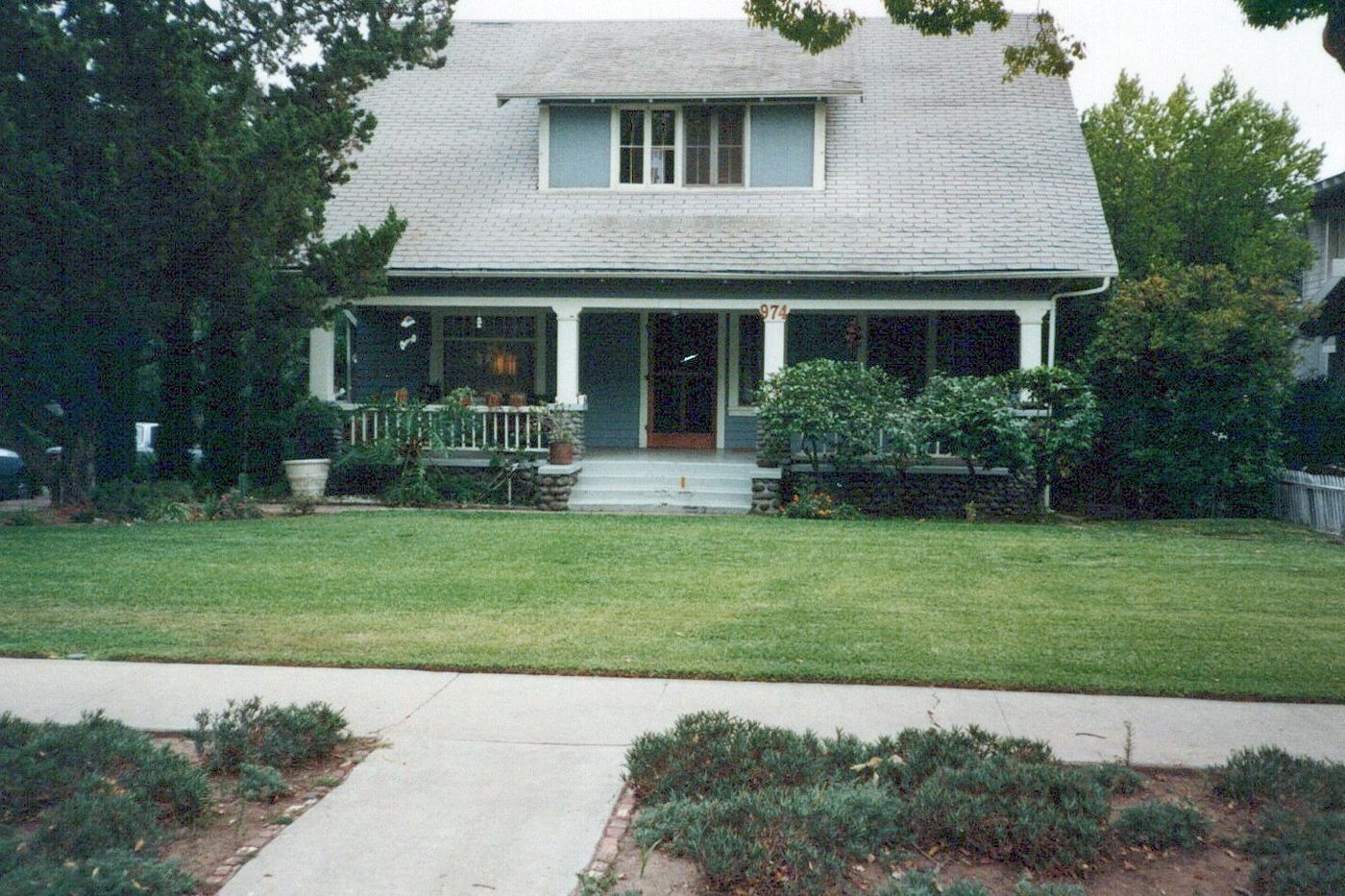
Richard Feynman’s house on Boulder Road burned down. Mark’s house is gone. Rick and George’s house too. Steve’s Pet’s is gone. The McNally mansion with its Turkish smoking room. The Rancho is gone. Zorthian’s ranch is gone. Jun’s house, Eddie’s house, the golf course are all gone. Ari’s house is gone. Heather’s house is gone. The elementary school, the synagogue, Owen’s house is gone. Too many others to list. I don’t even know how many. Along with the rest of the town, of course. More than nine thousand structures is the latest count. The house with the honeysuckle, where our rump of a family first found refuge in California, is nothing but scorched stones.
At my father’s lab at JPL, there was something called the “boo-boo drawer.” This was where they kept their failures, the remnants of botched experiments. Every lab has their boo-boo drawer, he said. “Because sometimes,” he said, “things go wrong.” When I was a child, we spent a lot of time with one of father’s colleagues from the lab. Bert and his wife, Susan, had a bigger house and a color TV with working knobs. Later, Bert’s career fizzled out, and he had to sell his house. He and Susan got divorced. Then he was diagnosed with a degenerative disease. Then he died. That house burned down. But it was no longer his house. He’d lost it 20 years earlier. I happened past its remnants recently and thought about the boo-boo drawer again. Last time I was there, decades ago, I was watching The Muppet Show. As a child, you don’t realize how close to the edge we all are. Then come the cataclysms of adult life: heartbreak, failure, disappointment, or even natural disaster. Sometimes, things go wrong. The Challenger explodes. People stop loving each other. A power line creates a spark.
My family’s house survived the fire, just barely. It was three blocks from the southern fire line east of Lake Avenue. Alison’s house survived. Nearby, my friend Sam’s house survived. He lives in the house he grew up in, where the space-themed wallpaper still lines his childhood bedroom. He was at home, watched the fire start, saw the neighbors flee, put on a respirator, and got on his roof with two hoses and fought the flames himself. He caught sight of flames creeping up neighbor’s houses and put those out.
There were many heroic efforts. I saw a video of two guys whose own houses had already disappeared walking up and down the street with hoses and ladders, watering strangers’ roofs. They were next to Katie’s house, which survived. At the bottom of the Eaton wash, the firefighters prevented some chlorine-gas tanks from creating an explosion that would have leveled an entire neighborhood.
My dad and stepmother were back in their house by January 10. My father said that he knows what polycyclic aromatic hydrocarbons are and my dipshit friends on Instagram don’t. The volatile organic compounds dissipate quickly, he thinks, and he’s not worried. “By the time any health effects arrive,” he said, “I’ll be dead.” Still, every item in the house was removed to have the toxic soot remediated.
Most people weren’t so lucky. It will take years to rebuild. What does it mean to reconstitute an entire town anyway? Altadena cannot be put back as it was. Some people question whether housing in fire-prone areas should be rebuilt at all. Look at Malibu, they say, where the hills have burned a dozen times and some people have erected the same splendid palace from the ground up several times already. We shouldn’t live deep in a fire ecology in the first place, goes the argument. Why stay where we’re not wanted?
But Altadena is not Malibu, or the Palisades, both of which are lined up in canyons or sitting beneath 5 million tons of fire fuel. The parts of Altadena that burned most completely were a mile or more from Eaton Canyon, just neighborhoods on regular streets laid out in grids, like anywhere else. Altadena was not a wealthy incursion into the “urban-wildlife interface”; it was a multigenerational community of middle-class families with some wild creative spirit to boot. It’s what the rest of Los Angeles could have been. If not California. Or America even.
The symbolic loss of Altadena feels even more acute now, as we see the failed promise of America being channeled into a cynical, populist nightmare. Because Altadena was a place where that promise had been fulfilled. What we lost in the fire wasn’t just a town; it was a historical arrangement — living evidence of the postwar American compact, that brief window between the Great Depression and Reagan, when there was a shared national project, and the story behind it felt true because there was the sense that, someday, that story could include anyone. Altadena embodied that durable civic optimism. A place where middle-class America was not a fantasy, where a teacher’s salary really could get you your own yard and a lemon tree. Our childhood was exploratory, not preparatory. We were not brands-in-progress. We were just kids. The world was porous. Altadena was how things were supposed to be. And suddenly, it was all smoldering debris.
The fire reached all the way up to Mt. Wilson. It tore up the canyons to the ridge, but when the fire reached the observatory, it was repelled. Mt. Wilson was saved. The towers are still there. Their lights still blink slowly, as they did over our youthful romps. Since then I have often thought about Edwin Hubble, smartly dressed and quietly seated in a wooden chair at the eyepiece of the world’s biggest telescope, peering into the past and finding something bigger than anyone expected.
Maybe you can reclaim what was lost. When Benjamin Eaton grew his grapes, there was nothing here at all. I’m here to tell you that stories are long. After the fires, spring arrived, and Altadena’s citrus trees bloomed in full: pale-yellow and orange starbursts flared throughout the empty neighborhoods. Fire is both a catastrophe and also a love story. When Bert was dying, Susan moved to Fresno to take care of the man she had divorced a decade before. My father and I forgave each other, although we’ve never said so exactly. I went with him once to visit the Mt. Wilson observatory. There was a bulb sitting over the control panel that had been illuminated since Einstein once visited, nearly a century before. And there was the chair. Can you believe that is the exact spot where we figured out just how big the universe is? Right up there on that mountain. I’m looking at it right now.