

Welcome to Plastic-Free Kitchen Week on the Strategist, where we’ve been obsessively researching and testing plastic alternatives — for everything from appliances to cleaning supplies to cookware. For more, head to our Plastic-Free Kitchen Week hub.
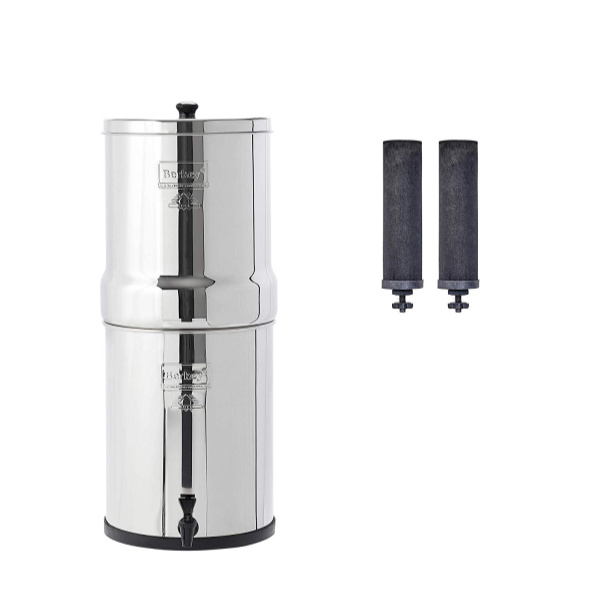
Given everything we are now beginning to understand about the effects of microplastics exposure on human health, it makes sense that water-filtration companies would start highlighting their systems’ ability to remove microplastics. Yet in almost all cases, the pitchers, dispensers, even the filters themselves are partially or entirely made of plastic. It’s just really hard to filter water without it. Even a health-food-store stalwart like the stainless-steel Big Berkey comes with a plastic spigot. So when I heard about the promising-looking new Aarke Purifier pitcher, I had to see whether it might be an exception. During testing, I learned the pitcher and reusable filter fit the bill but the filtering media did not — though there’s a good reason for that.

New! You can now save this product for later.
How does the Aarke Purifier work?
The Aarke pitcher is made entirely of glass and comes with a stainless-steel lid — which does have some plastic on its underside that never touches water. While there are plenty of other glass pitchers available, Aarke’s is the only one I’ve found that uses a removable stainless-steel reservoir instead of a plastic one. Its refillable filter is also made of stainless steel, with a mesh water intake at the top and a screw-off bottom with more mesh and a few holes for filtered water to flow through. The filter arrives empty but comes with a package of filtration granules that Aarke co-developed with Swiss water-filtration conglomerate BWT — best known for its industrial water-treatment solutions and Zerowater pitchers for home use. After pouring the granules into the filter, you stuff it into the slot in the middle. Be sure to push it in firmly to prevent unfiltered water from seeping through the silicone seal.

Once everything is in place, any water added to the Aarke’s reservoir flows through about three inches of activated carbon and ion-exchange resin pellets before dripping into the pitcher below. It takes a bit over four minutes for a full reservoir to drain through, and the five-cup pitcher fits up to two reservoirs of filtered water at a time.
How effective is it?
There are two filtration blends to choose from. “Pure” reduces limescale (the chalky, appliance-degrading deposit that makes water hard) while removing between 80 and 100 percent of chlorine and copper as well as 90 to 100 percent of lead. The “Enriched” blend similarly handles chlorine, copper, and lead but adds magnesium while lowering pH — resulting in a kind of homemade Essentia. Since I know my town’s tap water is a bit hard (though not overly so), I opted for the Pure granules, thinking they might help with my coffee brewing.
To gauge the effectiveness of these granules, I purchased a TDS (total dissolved solids) meter to measure hardness levels. The first sample directly from my tap read 103 parts per million on the TDS meter, while the filtered sample read 67 ppm — a 35 percent reduction. A sample collected from my fridge’s built-in filter read 99 ppm. A second round of tests on another day read 105 ppm from the tap, 73 ppm from the Aarke, and 102 ppm from the fridge. So the Aarke was clearly doing something to reduce limescale if not eliminate it.

I also bought a set of 20-in-one water-testing strips, but the color-coded readings for chlorine, lead, and copper were all effectively zero between the three samples. However, the strips did confirm the Aarke water sample was softer and had a lower pH level.
How does the water taste?
After washing out the pitcher and reservoir, soaking the filter and discarding the first batch of water as instructed by the manual, I still noticed a metallic aftertaste in the first few batches. Once things leveled out, the water from the Aarke tasted a touch sweeter than tap water, with none of the funk that tinges the water dispensed from my fridge. Overall, it was a noticeable, if subtle, improvement.
The filter’s effect on my morning espresso was much more pronounced. Using the same beans and grinder settings, the Aarke-filtered water produced a visibly thicker and more flavorful shot than I had been pulling using fridge water. This alone makes it worth considering for home baristas — especially since excessive water hardness can damage machine internals over time. Drip coffee makers also benefit from reduced water hardness, though I couldn’t taste any differences between batches brewed with the different water samples.
I did note a whiff of dankness in the reservoir after a couple of weeks, but this can be prevented by following Aarke’s suggested maintenance routine of boiling the filter (pellets and all) for three minutes once a week and cleaning the dishwasher-safe pitcher and reservoir. This is quite tedious, but occasional sanitization is the cost of reusability. In my experience, boiling the filter was less impactful than cleaning the reservoir, so you can probably skip that task most weeks if you’d like.
The pellets themselves need to be replaced every four to eight weeks at a cost of about $10 per packet. The bottom of the lid has an adjustable calendar to help keep track of the next swap-out date.

But is the Aarke Purifier actually plastic free?
In short, no. Even though the Aarke purifier’s pitcher, reservoir, and filter cartridge are free of plastic, it took writing this story for me to realize that the resin in “ion-exchange resin” probably isn’t derived from tree sap. After I asked about this, an Aarke representative confirmed the resin in question refers to polyacrylate, which carries multiple food-safe certifications from NSF and Tüv Süd but is still, in fact, plastic.

So how much do I really need to care about plastic in my water filter?
If you want to avoid plastic entirely, you could fill the Aarke’s filter with coconut-derived granular activated charcoal instead of its plastic granules and end up with a plastic-free system that produces clean-tasting, chlorine-free water. But this setup would actually miss many more substances that only plastics are capable of removing. “If a water-filter technology does not contain a synthetic material, it has the ability to reduce unwanted taste,” explained the Aarke rep. “However, it cannot filter the water from substances such as limescale or heavy metals like lead and copper.”
Microplastics may be the public-health menace of the day, made all the more alarming by the lack of clarity surrounding their long-term effects on human health. But the harms caused by some of the substances plastic-based filtration helps remove are unambiguously clear and have been for a long time. For example, “there is no safe blood lead level that has been identified for young children,” according to the CDC. And the EPA describes mercury as a neurotoxin that can also lead to kidney damage.
While I would happily recommend the Aarke to anyone looking to improve their morning coffee with softer water, there are far more effective and affordable options for removing potentially harmful contaminants. The ubiquitous Brita pitcher is certified to remove more kinds of contaminants than Aarke’s granules, and Lifestraw’s home dispensers go even further with independent certifications for bacteria, parasites, even microplastics. The catch? Almost every component is made of plastic.
Some (plastic) water-filtering products we like

New! You can now save this product for later.

New! You can now save this product for later.
New! You can now save this product for later.
More From This Series
- Ask the Strategist: Your Most Ultraspecific Plastic-Free-Kitchen Queries
- Welcome to Plastic-Free Kitchen Week
- Replace This With That: An Exhaustive List of Plastic-Free Kitchen Swaps
- Very Pleased With My Teflon-Free Ceramic Waffle-Maker
The Strategist is designed to surface useful, expert recommendations for things to buy across the vast e-commerce landscape. Every product is independently selected by our team of editors, whom you can read about here. We update links when possible, but note that deals can expire and all prices are subject to change.


